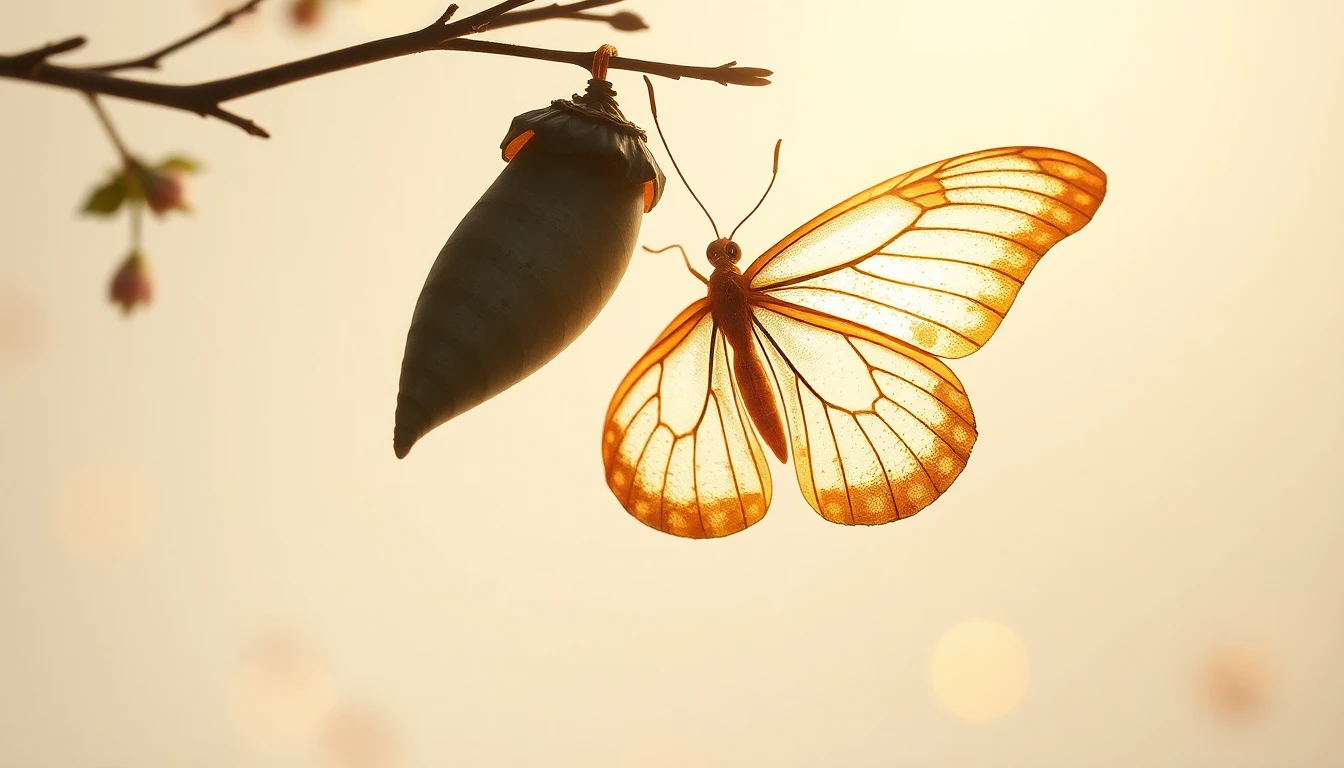
Spirit Animal
Butterfly — meaning, medicine, and teaching.
If you are in the middle of a change you cannot undo and you do not yet feel "transformed" — only unmade — the butterfly already knows where you are. The most cited image of becoming in the Western imagination is also the most misread. Real metamorphosis is not a polish. It is a dissolving. And the butterfly carries that truth quietly, refusing every shortcut you might still be hoping for.
The Medicine of the Butterfly
Inside the chrysalis the caterpillar dissolves almost completely. Its body becomes a kind of biological soup; only so-called imaginal discs — small clusters of cells — survive. From them the butterfly is rebuilt. It is not a reshaping or a remodeling: it is dissolution and reassembly. The caterpillar does not know the butterfly. The butterfly cannot remember being the caterpillar. And yet — in some studies, conditioned fear responses learned in the larval stage are still detectable in the adult moth.
That is the medicine of the butterfly: complete transformation in which the earlier form is not entirely lost. For women who believe their old identity must either be erased or kept whole, this is a late permission. Transformation is not denial.
In ancient Greece the soul carried the same word as the butterfly: psyche. Socrates and Plato used the image deliberately — they knew the butterfly was a classical figure for what flies on after the death of the caterpillar. In the Nahua cultures of Mesoamerica, the butterfly is the form that warrior souls take as they pass into the next life. The universal spread of this image is not coincidence: the metamorphosis we observe is so radical that every culture turned it into a symbol.
The Teaching
The first teaching is the chrysalis. The most important part of the butterfly is not the flight, it is the weeks or months in the cocoon, when nothing is visible and everything happens inside. Whoever carries the butterfly needs that time and is allowed to take it, even when the people around her do not understand. Cocoon time is not a pause — it is the work itself. Cutting it short damages a wing that was not yet dry.
The second teaching is that the butterfly is not "more" than the caterpillar. It is different. The caterpillar can eat leaves and stays close to the ground; the butterfly drinks nectar and flies. Both are complete; neither is better. That humility matters — transformation is not ascent, it is becoming new. The Soul Name guide assigns the butterfly to profiles that stand in the middle of a great biographical molting.
The third teaching is the brevity of life. Most butterflies live only two to four weeks as adults. That short flight is part of the design, not a flaw. To carry the butterfly is to know that some chapters of a life are naturally short — and their brevity does not lessen their value, it confirms it. The monarch, which migrates thousands of kilometers from Canada to Mexico, completes the journey across generations: no single butterfly flies the whole route. For wider context see the overview on power animals.
The Shadow
The butterfly shadow is restlessness. Whoever only flutters lands nowhere. Some people use the butterfly as an excuse for endless new beginnings, never enduring the long pause of the chrysalis. The second shadow is decoration: the symbol as postcard, the animal as tattoo, transformation as a slogan. Real metamorphosis does not look pretty in the middle. To carry the butterfly, you have to tolerate the soup.
If you would like to feel which of the five elemental archetypes you are carrying through your own metamorphosis right now, the free 60-second soul-type quiz is here. It gives you a first archetype hint without asking for an email — useful especially in the cocoon-phase, when so little else is yet legible.
When This Animal Appears
The butterfly arrives in biographical upheavals that can no longer be undone. After a major separation, after a spiritual breakthrough, after an illness that rearranges everything. Often it shows up late — once the caterpillar phase is already over and the cocoon is just beginning. Sometimes its arrival is literal: a striking encounter with a moth in the garden, in a cemetery, in the room of someone who is dying. These encounters explain themselves.
Invocation
Butterfly, witness me as I dissolve. Tell me the soup in the cocoon is not loss but the work itself — and give me the patience to wait until the wings are dry.