Spirit Animal
Spider — meaning, medicine, and teaching.
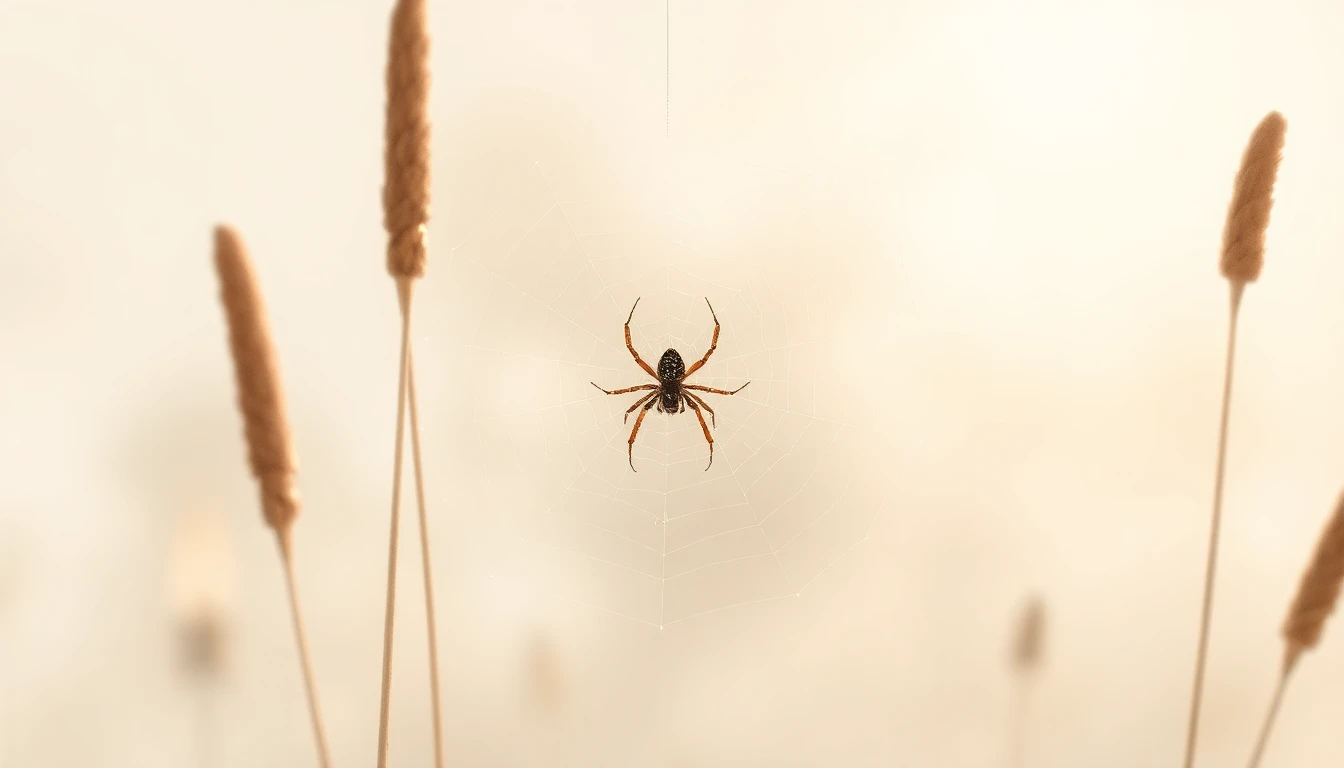
If your life lately feels like a tangle of half-finished conversations and unfinished sentences, the spider may already be patiently waiting at the center of all of it. She is the weaver in many old cosmologies — Spider Grandmother of the Hopi, Arachne of the Greeks, Anansi of the Akan. Across continents, she is the figure who makes the world out of threads. Her medicine is the architecture of your own life.
The Medicine of the Spider
By weight, spider silk is stronger than steel. A spider can produce up to seven different kinds of silk from the same glands — one for the load-bearing spokes, a sticky one for catching prey, a soft one for the egg sac. She builds, destroys, and rebuilds, often daily. After a storm she weaves the web before she eats. That reliability is her gift.
The medicine of the spider: your life needs a structure you weave yourself. Not given, not inherited — woven. And that structure breaks down regularly. That is not a tragedy, that is the material. To carry the spider is to spend part of every year restoring connections — emails, calls, visits — without reading the work as a burden.
Among the Diné (Navajo) of North America, Spider Woman is the creator who taught the people to weave. Diné rugs to this day include a deliberate irregularity, the spirit line, by which the weaver honors Spider Woman and at the same time keeps the work from being declared "finished." That practice is a quiet teaching: a perfect weaving is not a compliment, it is a form of pride. The spider herself never lets her web become too perfect.
The Teaching
The first teaching is patience. A spider often sits motionless for hours at the center of her web and waits. She does nothing the physics will not do. The wind brings the fly, not her impatience. To walk with the spider is to learn that not every stillness is passive. Sometimes the work is the building and the waiting. It is an antidote to the activism culture many modern women carry. The spider says: you do not have to hunt. You may sit where you sit and receive what is coming.
The second teaching is the center. The spider does not sit at the edge of her web but exactly in the middle. From there she feels every thread. Translated: anyone who looks at her own life from a peripheral role rather than from the center loses the picture of her own relationships. The spider says: return to your middle. In the Soul Name guide she appears for women who have spent years weaving for others and have neglected their own web.
The third teaching is writing as a web. Many researchers connect the Phoenician and Greek alphabets — the parents of our Latin letters — to the imagery of the spider's web: signs laid out in threads, words turned into space. To carry the spider is often to have a particular relationship to writing — diaries, letters, lists. That small daily practice is a spider exercise without ever being named one. See the broader frame in the overview on power animals.
The Shadow
The spider shadow is entanglement — a web that no longer catches but binds. Whoever only controls her relationships weaves shackles, not structure. The second shadow is venom: words as bites that paralyze before the other notices being bitten. Not every spider-bearer is dangerous, but the possibility is part of her medicine. To respect her gift is to respect that face too.
If you'd like to feel which of the five elemental archetypes is currently carrying you — and whether your inner spider is being asked to gather the ends or to release some of them — the free 60-second soul-type quiz is here. No email needed for the first orientation.
When This Animal Appears
The spider arrives when your life frays — open threads in every direction, unfinished conversations, postponed decisions. She comes with an instruction: gather the ends. She also shows herself in seasons when you are meant to build a new structure — a project, a book, a practice. Many women discover their spider when they begin late writing — memoirs, family chronicles, journals never meant to be read. The web grows where no one else is looking.
Invocation
Spider, teach me to weave what is mine — and to release what is not. Help me find my center when the web tears, and let me begin again tomorrow with the patience that you are.